
Butternut Squash Carbonara Pasta
This butternut squash carbonara pasta is basically fall’s answer to “What happens when comfort food gets a glow-up?”
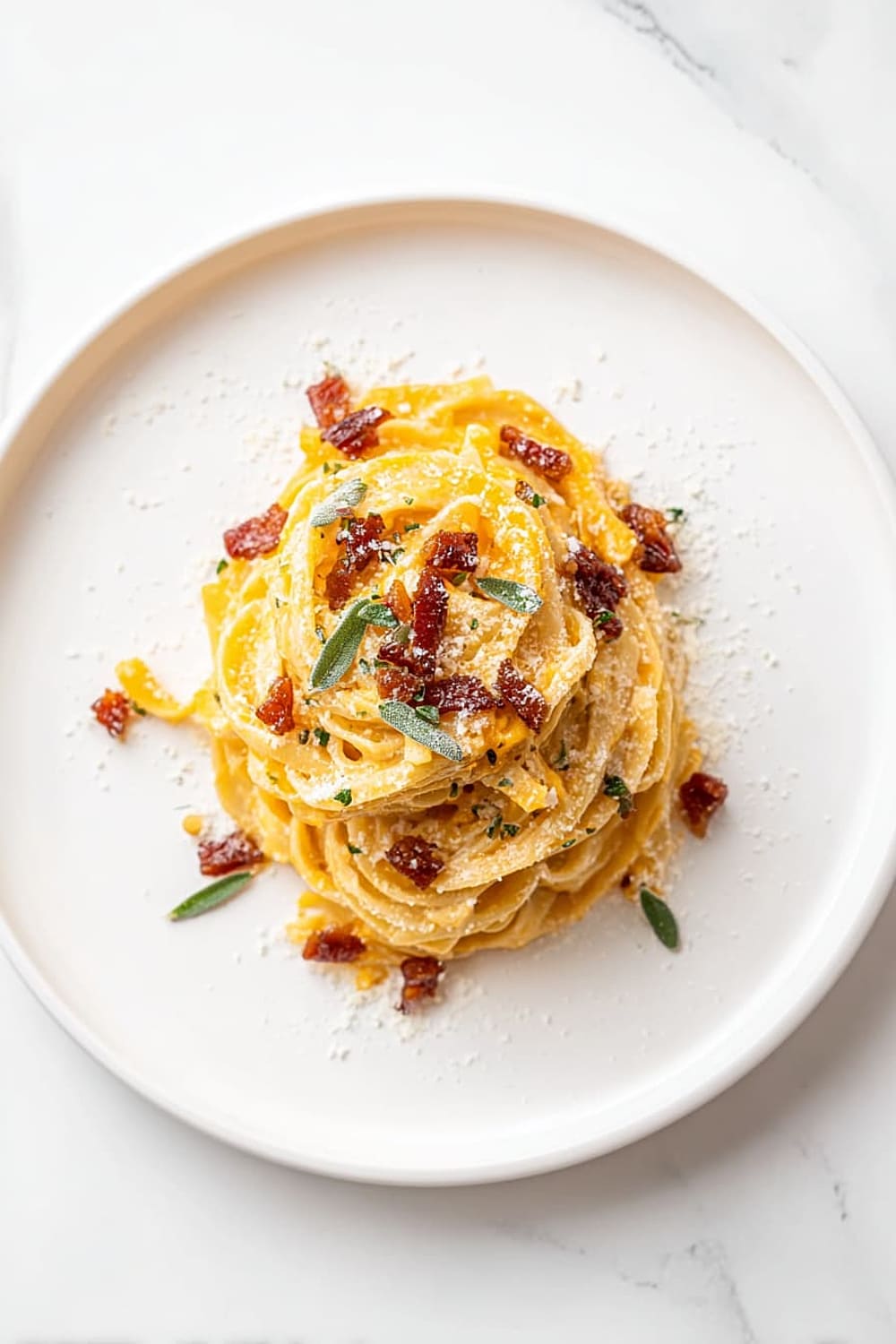
Picture traditional carbonara’s creamy, bacon-studded goodness, but with roasted butternut squash bringing sweet, nutty flavors that make your taste buds do a happy dance.
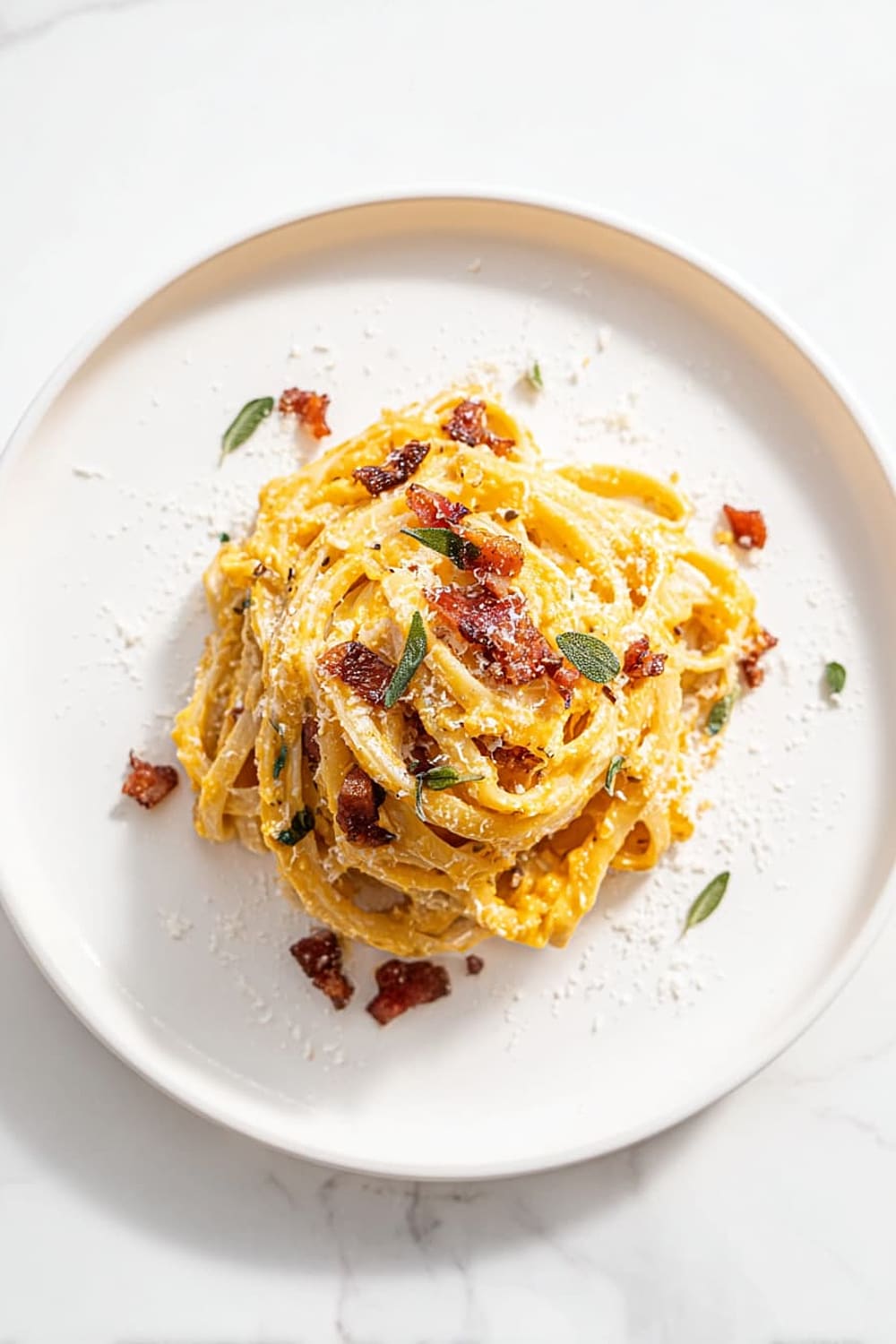
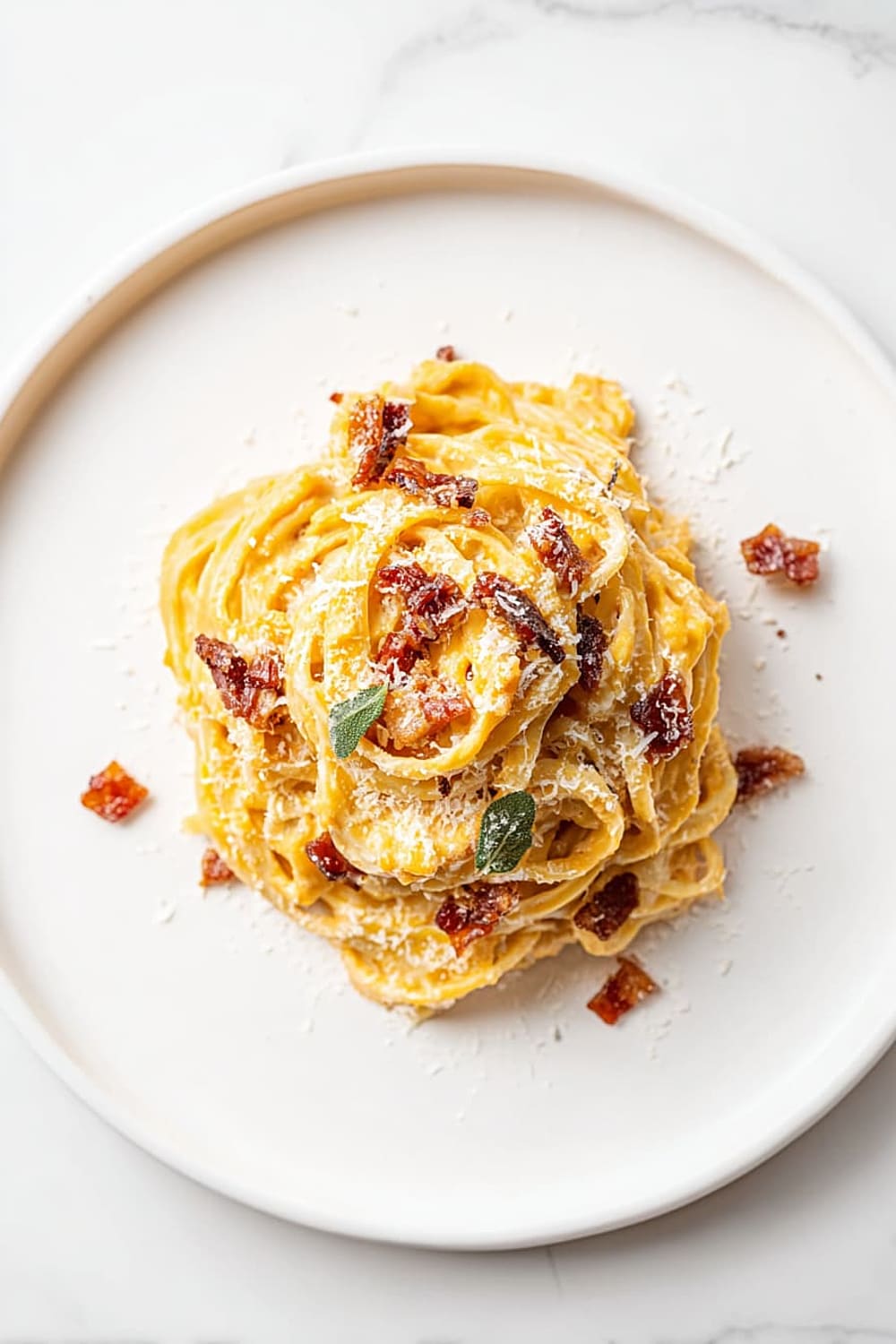
The silky squash purée creates the most luxurious sauce that clings to every strand of linguine, while crispy bacon and fresh sage add layers of savory perfection.
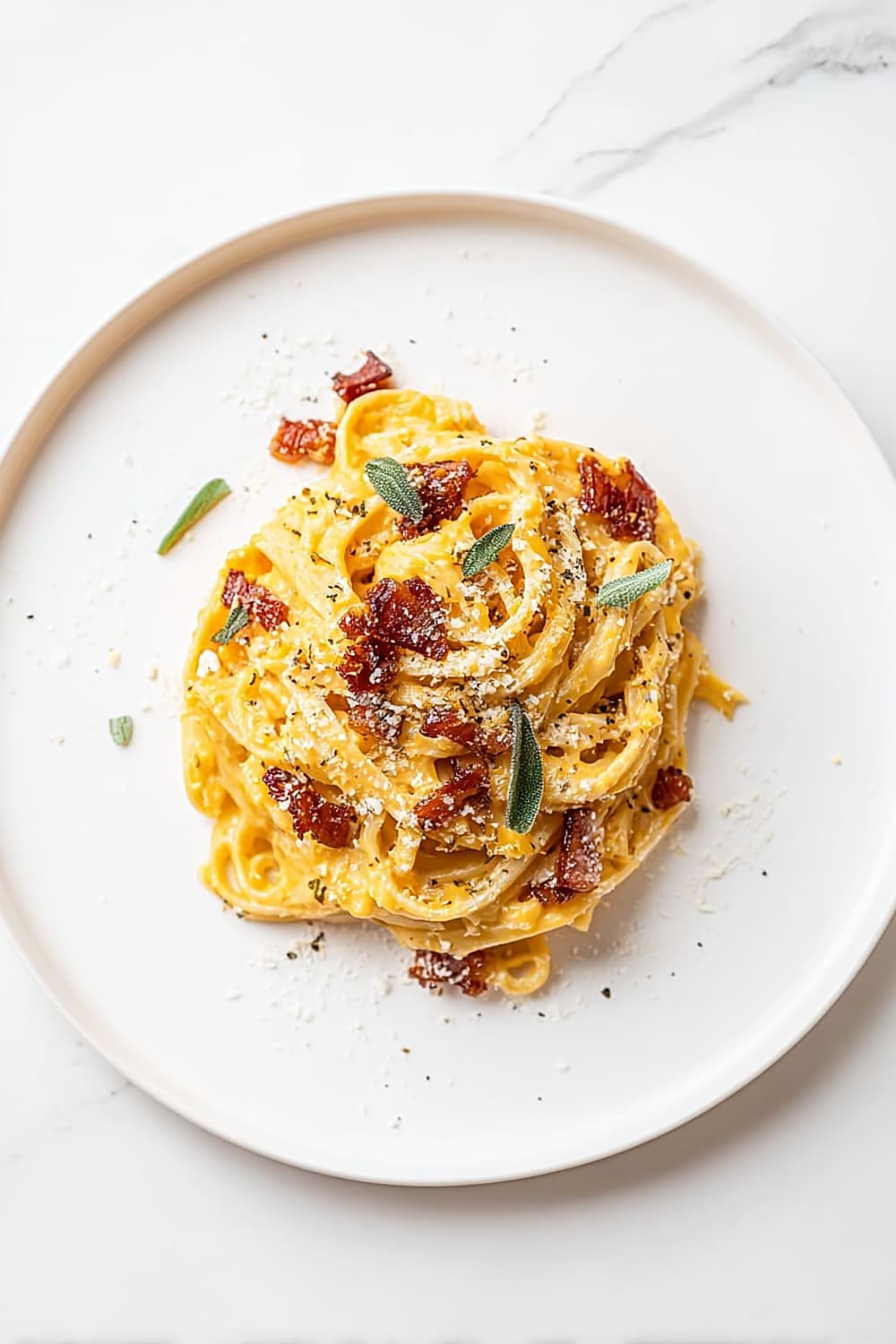
This recipe proves you can take a classic Italian dish and give it a seasonal twist without losing any of the soul that makes carbonara so irresistible.

The best part is watching people take that first bite and get completely confused about how something this restaurant-worthy came out of your regular old kitchen.

Warning: making this will result in people asking for the recipe, then acting surprised when you tell them it’s actually easier than traditional carbonara because the squash does half the work for you.
Ingredients
For the Roasted Butternut Squash
- ½ large butternut squash, peeled and chopped into ½-inch pieces
- 2 tablespoons olive oil (extra virgin recommended)
- ½ tablespoon salt
- ¼ teaspoon ground black pepper
- ½ teaspoon garlic powder
- ½ teaspoon onion powder
- ½ teaspoon cinnamon
For the Pasta and Sauce
- 8 slices bacon, chopped
- ½ large onion, cut into 1-inch pieces
- 2 tablespoons fresh sage, chopped (plus more for garnish)
- 1 lb. linguine pasta
- 2 large egg yolks
- ½ cup Parmesan cheese, freshly grated (plus more for garnish)
Instructions
Prepare the Butternut Squash
- 1 Preheat your oven to 400°F (200°C) and line a rimmed baking sheet with parchment paper for easy cleanup. Place the chopped butternut squash pieces in a single layer on the prepared baking sheet, ensuring they don’t overlap for even roasting.
- 2 Drizzle the olive oil over the squash pieces, then sprinkle with salt, black pepper, garlic powder, onion powder, and cinnamon. Use your hands or a large spoon to toss everything together until each piece is evenly coated with the oil and spice mixture. The cinnamon adds a subtle warmth that complements the squash’s natural sweetness beautifully.
- 3 Roast the seasoned squash for 20-25 minutes, or until the pieces are fork-tender and lightly caramelized around the edges. The squash should easily pierce with a fork but still hold its shape. Remove from the oven and let cool slightly while you prepare the other components – this cooling step is crucial for the food processor step later.
Cook the Bacon and Aromatics
- 4 While the squash is roasting, heat a large cast iron skillet or heavy-bottomed pan over medium-high heat. Add the chopped bacon and cook, stirring occasionally with tongs, until the pieces are golden brown and crispy, about 6-8 minutes. The bacon fat will render out, creating the flavorful base for your sauce.
- 5 Using a slotted spoon, transfer the crispy bacon to a paper towel-lined plate to drain excess fat. This step prevents the bacon from becoming soggy and maintains that perfect textural contrast in the finished dish.
- 6 Remove all but 1 tablespoon of the bacon fat from the skillet – save the extra fat for another use if desired. Add the chopped onion to the remaining bacon fat and cook over medium heat for 6-8 minutes, stirring occasionally, until the pieces are translucent and softened. Add the chopped sage and cook for 1 more minute until fragrant. Turn off the heat and set the skillet aside.
Prepare the Pasta and Sauce
- 7 Bring a large pot of salted water to a rolling boil. The water should taste like mild seawater – this is your only chance to season the pasta itself. Cook the linguine according to package directions until al dente, usually 8-10 minutes. Before draining, reserve 1 full cup of the starchy pasta cooking water – this liquid gold will help create the perfect sauce consistency.
- 8 While the pasta cooks, add the slightly cooled roasted squash to a food processor fitted with the steel blade. Process until completely smooth and creamy, about 1-2 minutes. With the processor running, slowly drizzle in ¼ cup of the reserved pasta water through the feed tube and pulse until the mixture reaches a smooth, sauce-like consistency.
Bring It All Together
- 9 Add the butternut squash purée, egg yolks, and grated Parmesan cheese to the skillet with the onion and sage mixture. The residual heat from the pan and ingredients will gently cook the egg yolks without scrambling them. Use a whisk to combine everything while the mixture is still warm, creating a silky, emulsified sauce.
- 10 Add the drained pasta and crispy bacon to the skillet and use tongs to toss everything together until the pasta is evenly coated with the creamy squash sauce. If the sauce seems too thick, gradually add more of the reserved pasta cooking water, 1-2 tablespoons at a time, until you achieve the perfect creamy consistency that coats each strand without being gluey.
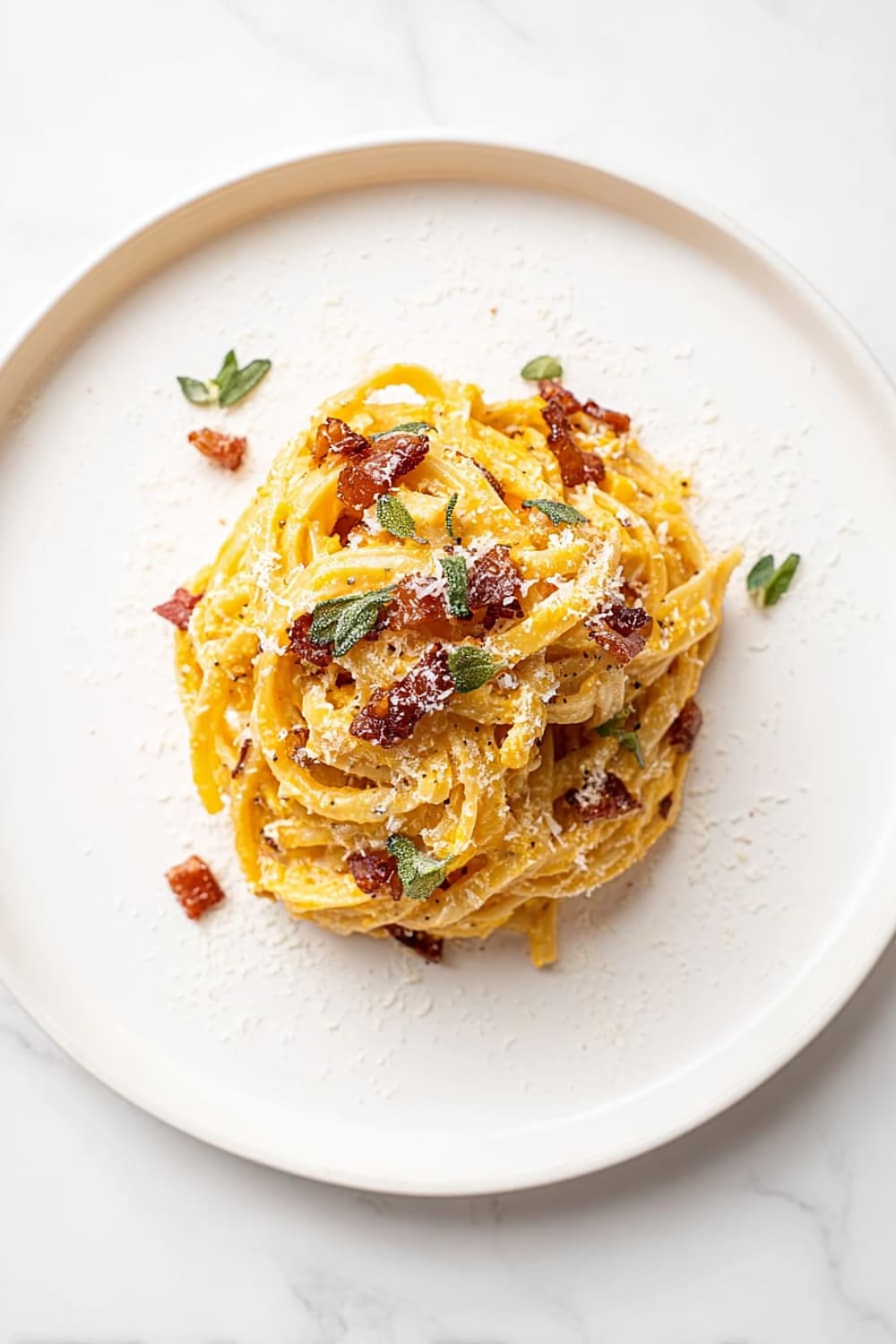
- 11 Immediately plate the pasta in individual bowls or on a large serving platter. Top each serving with additional freshly grated Parmesan cheese, chopped fresh sage, and a generous amount of freshly cracked black pepper – the pepper really makes this dish shine! Serve immediately while hot for the best texture and flavor experience.
Recommended Equipment and Kitchen Tools
Essential Tools (for best results)
- Large rimmed baking sheet – ensures even roasting of the butternut squash without pieces rolling off
- Food processor – creates the silkiest squash purée that forms the base of your luxurious sauce
- Cast iron skillet or heavy-bottomed pan – retains heat perfectly for creating the emulsified carbonara sauce
- Sharp chef’s knife – makes quick work of peeling and chopping the butternut squash safely
Helpful Upgrades
- Kitchen scale – for precise measurements if you want to scale the recipe up or down
- Microplane grater – creates the finest Parmesan cheese texture that melts seamlessly into the sauce
- Pasta fork or tongs – essential for tossing the pasta without breaking the delicate linguine strands
- Instant-read thermometer – helps ensure your sauce stays at the perfect temperature to avoid scrambling the eggs
Nice-to-Have Options
Recipe Variations and Dietary Modifications
Gluten-Free Adaptation
- Replace linguine with gluten-free pasta made from rice, corn, or legumes – use the same 1 lb amount
- Ensure your bacon doesn’t contain gluten-containing additives (most pure bacon is naturally gluten-free)
- The sauce base is naturally gluten-free, so no other modifications needed
- Cook gluten-free pasta according to package directions as timing may vary slightly
Dairy-Free Modifications
- Substitute nutritional yeast (¼ cup) for the Parmesan cheese to maintain that nutty, umami flavor
- Use cashew cream or coconut cream (2-3 tablespoons) to add richness if desired
- The butternut squash purée provides natural creaminess, so minimal dairy replacement is needed
Vegan Version
- Replace bacon with mushroom bacon or coconut bacon for smoky flavor
- Omit egg yolks entirely – the squash purée provides sufficient binding and creaminess
- Use nutritional yeast instead of Parmesan cheese
- Add 1 tablespoon olive oil to the sauce for extra richness
Lower-Carb Alternative
- Replace linguine with spiralized zucchini noodles or spaghetti squash
- Reduce butternut squash to ¼ of the original amount to lower overall carbs
- Increase bacon to 10 slices and add more vegetables like roasted Brussels sprouts
Flavor Variations
- Autumn Spice Version: Add ¼ teaspoon nutmeg and pinch of allspice to the squash seasoning
- Herb Garden Style: Replace sage with fresh thyme, rosemary, or a combination of both
- Protein Boost: Add grilled chicken or Italian sausage along with the bacon
Nutritional Information and Health Benefits
Key Nutritional Highlights
Health Benefits of Main Ingredients
Dietary Considerations
Smart Swaps and Ingredient Substitutions
Common Substitutions:
- Butternut squash → Delicata squash or acorn squash (same amount, may need 5-10 minutes longer roasting time)
- Linguine pasta → Fettuccine, pappardelle, or rigatoni (any long pasta works beautifully)
- Fresh sage → Dried sage (use 2 teaspoons instead of 2 tablespoons)
- Bacon → Pancetta, prosciutto, or turkey bacon for different flavor profiles
Budget-Friendly Swaps:
- Fresh Parmesan → Pre-grated Parmesan (though fresh tastes better, pre-grated works in a pinch)
- Butternut squash → Frozen butternut squash cubes (thaw and roast as directed, may reduce cooking time)
- Bacon → Ham or Canadian bacon chopped into small pieces
Pantry Emergency Substitutions:
- Fresh sage → Italian seasoning (1 teaspoon) or dried thyme (1 teaspoon)
- Egg yolks → 1 whole egg (slightly different texture but still delicious)
- Onion powder → Fresh onion (2 tablespoons finely minced, add to the squash while roasting)
Pro Tips for Substitutions:
- When using frozen squash, pat it completely dry before seasoning to avoid watery results
- If substituting dried herbs for fresh, add them earlier in the cooking process to bloom their flavors
- Store leftover bacon fat in the refrigerator for up to one month – it’s perfect for roasting vegetables

Make It Diabetes-Friendly
Carb Reduction Strategies:
- Replace half the pasta with spiralized zucchini or shirataki noodles to reduce carbs by approximately 30-40%
- Reduce butternut squash to ¼ large squash instead of ½, cutting carbs by about 15 grams per serving
- Use whole grain or legume-based pasta for added fiber and protein, which helps slow glucose absorption
Portion & Timing Tips:
- Reduce serving size to 4 ounces pasta per person instead of the standard 6 ounces
- Estimated carbs per modified serving: Approximately 45-50 grams instead of 65-70 grams
- Add extra protein like grilled chicken breast (4 oz per serving) to help stabilize blood sugar
- Include a side salad with olive oil vinaigrette to add fiber and healthy fats
Smart Additions:
- Double the bacon to 16 slices for increased protein and fat, which helps slow carb absorption
- Add roasted broccoli or Brussels sprouts to increase fiber and nutrients while adding minimal carbs
- Use extra virgin olive oil liberally – the healthy fats help moderate blood sugar spikes
Total Carb Reduction: These modifications can reduce total carbohydrates by 20-35 grams per serving while maintaining the dish’s satisfying, comfort-food appeal.
Perfect Pairing Suggestions
Beverage Pairings
Side Dish Recommendations
Complete Meal Ideas
Occasion Suggestions
Pro Tips and Troubleshooting
Professional Techniques
Common Mistake Prevention
Storage and Reheating
Make-Ahead Strategy
Butternut Squash Carbonara Pasta
Ingredients
For the Roasted Butternut Squash
- ½ large butternut squash, peeled and chopped into ½-inch pieces
- 2 tablespoons olive oil extra virgin recommended
- ½ tablespoon salt
- ¼ teaspoon ground black pepper
- ½ teaspoon garlic powder
- ½ teaspoon onion powder
- ½ teaspoon cinnamon
For the Pasta and Sauce
- 8 slices bacon, chopped
- ½ large onion, cut into 1-inch pieces
- 2 tablespoons fresh sage, chopped plus more for garnish
- 1 lb. linguine pasta
- 2 large egg yolks
- ½ cup Parmesan cheese, freshly grated plus more for garnish
Instructions
Prepare the Butternut Squash
- Preheat your oven to 400°F (200°C) and line a rimmed baking sheet with parchment paper for easy cleanup. Place the chopped butternut squash pieces in a single layer on the prepared baking sheet, ensuring they don’t overlap for even roasting.
- Drizzle the olive oil over the squash pieces, then sprinkle with salt, black pepper, garlic powder, onion powder, and cinnamon. Use your hands or a large spoon to toss everything together until each piece is evenly coated with the oil and spice mixture. The cinnamon adds a subtle warmth that complements the squash’s natural sweetness beautifully.
- Roast the seasoned squash for 20-25 minutes, or until the pieces are fork-tender and lightly caramelized around the edges. The squash should easily pierce with a fork but still hold its shape. Remove from the oven and let cool slightly while you prepare the other components – this cooling step is crucial for the food processor step later.
Cook the Bacon and Aromatics
- While the squash is roasting, heat a large cast iron skillet or heavy-bottomed pan over medium-high heat. Add the chopped bacon and cook, stirring occasionally with tongs, until the pieces are golden brown and crispy, about 6-8 minutes. The bacon fat will render out, creating the flavorful base for your sauce.
- Using a slotted spoon, transfer the crispy bacon to a paper towel-lined plate to drain excess fat. This step prevents the bacon from becoming soggy and maintains that perfect textural contrast in the finished dish.
- Remove all but 1 tablespoon of the bacon fat from the skillet – save the extra fat for another use if desired. Add the chopped onion to the remaining bacon fat and cook over medium heat for 6-8 minutes, stirring occasionally, until the pieces are translucent and softened. Add the chopped sage and cook for 1 more minute until fragrant. Turn off the heat and set the skillet aside.
Prepare the Pasta and Sauce
- Bring a large pot of salted water to a rolling boil. The water should taste like mild seawater – this is your only chance to season the pasta itself. Cook the linguine according to package directions until al dente, usually 8-10 minutes. Before draining, reserve 1 full cup of the starchy pasta cooking water – this liquid gold will help create the perfect sauce consistency.
- While the pasta cooks, add the slightly cooled roasted squash to a food processor fitted with the steel blade. Process until completely smooth and creamy, about 1-2 minutes. With the processor running, slowly drizzle in ¼ cup of the reserved pasta water through the feed tube and pulse until the mixture reaches a smooth, sauce-like consistency.
Bring It All Together
- Add the butternut squash purée, egg yolks, and grated Parmesan cheese to the skillet with the onion and sage mixture. The residual heat from the pan and ingredients will gently cook the egg yolks without scrambling them. Use a whisk to combine everything while the mixture is still warm, creating a silky, emulsified sauce.
- Add the drained pasta and crispy bacon to the skillet and use tongs to toss everything together until the pasta is evenly coated with the creamy squash sauce. If the sauce seems too thick, gradually add more of the reserved pasta cooking water, 1-2 tablespoons at a time, until you achieve the perfect creamy consistency that coats each strand without being gluey.
- Immediately plate the pasta in individual bowls or on a large serving platter. Top each serving with additional freshly grated Parmesan cheese, chopped fresh sage, and a generous amount of freshly cracked black pepper – the pepper really makes this dish shine! Serve immediately while hot for the best texture and flavor experience.


